• (+86)21 80399582-801
  • Emergency Industrial Park,Wenzhou, Zhejiang , CN
  • tech.sales@leadingtec.cn

Tag: algae

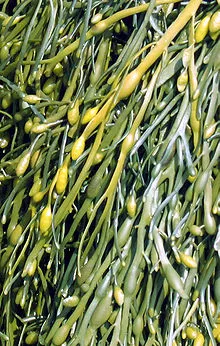
Sorption of fluorescent polystyrene microplastic particles to edible seaweed Fucus vesiculosus
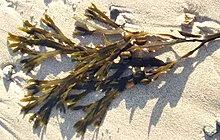
Fucus vesiculosus

Increased global demands for food have raised interest for seaweed as a healthy and sustainable food source. At the same time, the large amounts of microplastic in the oceans have raised concern in relation to pollution of seafood including sea vegetables. The aim of this study was to examine sorption of fluorescent polystyrene (PS) microplastic particles to edible macroalga (seaweed) Fucus vesiculosus, and to investigate to what extent adsorbed PS particles could be washed off, using an industrial relevant method.…

Heterotrophic growth and oil production from Micractinium sp. ME05 using molasses

Micractinium pusillum

In this study the thermo-resistant green alga Micractinium sp. ME05 was cultivated in media containing molasses as a carbon source. Shake flask experiments and 2-L bioreactor experiments were conducted at different inoculum ratios, aeration rates, and agitation speeds. The experimental condition which resulted in the highest biomass concentration (3.73 ± 0.45 g L−1) with 10% inoculum in 500-mL flasks was scaled up to 2-L flasks at two aeration rates (0.25 and 0.5 L min−1). An increase in biomass concentration from 2.35 ± 0.53 to 3.06 ± 0.21 g L−1 was observed…

Use of Monascus sp. NP1 for bioethanol production from Cladophora glomerata

Cladophora

The fungus Monascus sp. was able to produce ethanol instead of red pigment under glucose derepression with greater and more tolerance to ethanol than yeast. Algae are known as a polysaccharide resource for bioethanol production. This work was focused on the optimization of cellulase production through solid-state fermentation of straw and rice bran usingTrichoderma viride TISTR 3161 for saccharification by the alga, Cladophora glomerata. The best conditions for alga enzymatic hydrolysis were proposed after varying crude enzyme and temperature, comparing…

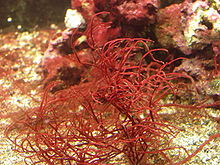
Production performance, immune response and carcass traits of broiler chickens fed diet incorporated with Kappaphycus alvarezii

Kappaphycus alvarezii

This study evaluates the production performance, immune responses and carcass traits in broiler chickens (0 to 42 days) fed diet with incorporated Kappaphycus alvarezii (AF-KWP). Day-old chicks (280) were randomly distributed into 35 groups with 8 chicks in each group (7 dietary treatments × 5 replicates). Seven experimental diets were formulated by adding 0 (control—T1), 0.25 AF-KWP (T2), 0.50 AF-KWP (T3), 0.75 AF-KWP (T4), 1.00 AF-KWP (T5), 1.25 AF-KWP (T6) and 1.50 AF-KWP (T7) respectively. Body weight gain (g) significantly (P < 0.05)…

Acid preservation of Saccharina latissima for application as a carbon source for fermentation to biofuels and chemicals

Saccharina_latissima

Cultivated kelps (brown algae) are a sustainable biomass resource and a potential feedstock for conversion to biofuels and chemicals. Due to seasonal variations, and a short period with optimal biomass composition, preservation and storage of the biomass is required for a year-round operation of a seaweed processing plant. For use of the biomass as a carbon source for fermentation to biofuels, only low-cost preservation methods are feasible. Preservation of Saccharina latissima (sugar kelp) by sulphuric and formic acid has been…

Effect of different drying techniques on the phytochemical content and antioxidant activity of Kappaphycus alvarezii

Kappaphycus alvarezii

The effect of different drying techniques on the phytochemical content and antioxidant activity of Kappaphycus alvarezii (‘crocodile’ morphotype) were investigated. Phytochemical (total phenolic, flavonoid, anthocyanin and carotenoid content) and antioxidant activity of the seaweed were determined. The seaweed was dried using seven types of drying techniques; oven drying (temperature of 40 °C), oven drying (temperature of 80 °C), sun drying, hang drying, sauna drying, shade drying and freeze drying. There were significant differences in the phytochemical content and antioxidant activity between the…

Development of phycology in Malaysia

Haematococcus Pluvialis

Phycological research in Malaysia started in the 1900s with the documentation of both freshwater and marine microalgae and seaweeds, especially those with economic importance. Phycological research has grown and matured from initial diversity and ecological studies to DNA-based research which allowed us to venture into the world of algal biotechnology with focus on phylogenetics, genomics and strain improvement. Our research has expanded towards finding solutions to the declining food and fuel resources to be relevant in today’s world of energy…

In vitro inhibitory effect of sulfated galactans isolated from red alga Gracilaria fisheri on melanogenesis in B16F10 melanoma cells

Gracilaria

Hyperpigmentation of the skin results from excessive melanin formation in melanocytes, and overproduction of melanin frequently leads to melanoma. The aim of this study was to investigate the potential of sulfated galactans (SG) from Gracilaria fisheri to inhibit melanin formation or melanogenesis. Cellular and molecular mechanisms of inhibition were also investigated. SG was evaluated in vitro for its inhibitory effect on mushroom tyrosinase activity, cell-free tyrosinase activity, and cellular tyrosinase activity. B16F10 mouse melanoma cells were cultured with SG and…

Ascophyllum nodosum-based algal extracts act as enhancers of growth, fruit quality, and adaptation to stress in salinized tomato plants

Ascophyllum nodosum

Seaweed extracts (SWE) are widely used to improve plant growth, fruit quality, and stress tolerance. However, the functional link between the complex composition of algal-based products and their mechanisms of action has been only marginally addressed. A greenhouse experiment was performed on Microtom tomato plants in order to evaluate the effect of two Ascophyllum nodosum-based algal derivatives, Rygex (R) and Super Fifty (SF), on a tomato exposed to salinity (0, 42.5, and 85 mM NaCl) and normal and reduced nutrient availability…

Response of Tisochrysis lutea [Prymnesiophycidae] to aeration conditions in a bench-scale photobioreactor

PBR--Guangyu company

The effects of superficial gas velocity (Ugr), gas entrance velocity (ν), and bubble size on the growth of Tisochrysis lutea was investigated in 600-mL photobioreactors operated with airlift pumps. Superficial gas velocities, calculated from measured air flow rates, ranging from 7 to 93 mm s−1 were created using a 1.6-mm diameter syringe. We tested the effects of sparger velocity over a range of 2.48 to 73.4 m s−1 and the effects of bubble size by using two styles of air stones and an open…