• (+86)21 80399582-801
  • Emergency Industrial Park,Wenzhou, Zhejiang , CN
  • tech.sales@leadingtec.cn

Category: Photobioreactor Products

Does a large-scale continuous algal production system provide a stable supply of fatty acids to bivalve hatcheries?
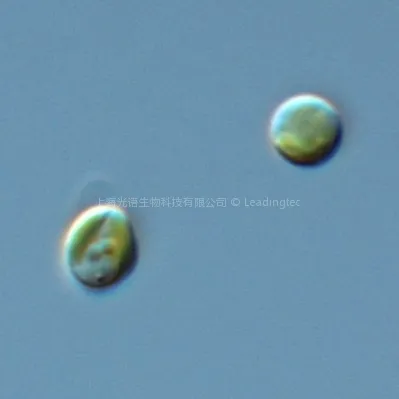
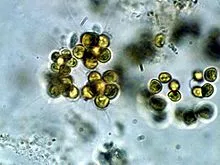
Isochrysis galbana

The variation of fatty acid (FA) content and composition of the microalgal production (Isochrysis sp., Pavlova lutheri and Chaetoceros muelleri) in a continuous large-scale production system (500-L bags) used in hatcheries were analysed. The variation of the FAs was analysed in replicate bags over time for the different species. Total FA content (pg cell−1) increased significantly (p < 0.05) in the P. lutheri and C. muelleri bags over time. The content of the essential FAs (arachidonic acid (ARA), eicosapentaenoic acid (EPA), n-6…

Sorption of fluorescent polystyrene microplastic particles to edible seaweed Fucus vesiculosus

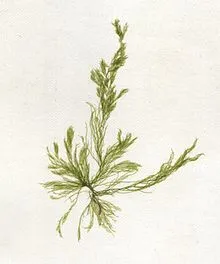
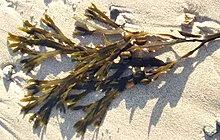
Fucus vesiculosus

Increased global demands for food have raised interest for seaweed as a healthy and sustainable food source. At the same time, the large amounts of microplastic in the oceans have raised concern in relation to pollution of seafood including sea vegetables. The aim of this study was to examine sorption of fluorescent polystyrene (PS) microplastic particles to edible macroalga (seaweed) Fucus vesiculosus, and to investigate to what extent adsorbed PS particles could be washed off, using an industrial relevant method.…

CO2 fixation capability of Chlorella sp. and its use in treating agricultural wastewater

chlorella sp.

Palm oil mill effluent (POME) is a highly polluted agro-industrial wastewater. The CO2 in industrial flue gas requires treatment before it can be discharged into the environment. Utilizing microalgae as the agent to treat wastewater and industrial flue gas is a waste-to-wealth approach. The resulting biomass can be commercialized in the form of valuable products. Chlorella sp. is a microalgal species that can tolerate the pollutant load and has been proven to be a suitable species for CO2 fixation. In…

Growth factors in oceanic sediment significantly stimulate the biomass and lipid production of two oleaginous microalgae

Phaeodactylum tricornutum

This study demonstrates the effects of growth stimulators in oceanic sediment on biomass and lipid production of two oleaginous microalgae, Botryococcus braunii LB572 andPhaeodactylum tricornutum B2089. At the optimal mixing ratio of culture medium and oceanic sediment extract of 6:4 (v/v), specific growth rates of B. braunii LB572 and P. tricornutum B2089 increased 13.0- and 11.3-fold, respectively, compared to a sediment-free medium. The maximum biomass and lipid productions of B. braunii LB572 were 5.54 and 3.09 g L−1, and those of P.…

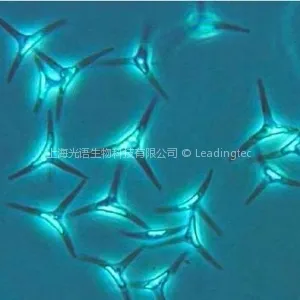
Heterotrophic growth and oil production from Micractinium sp. ME05 using molasses

Micractinium pusillum

In this study the thermo-resistant green alga Micractinium sp. ME05 was cultivated in media containing molasses as a carbon source. Shake flask experiments and 2-L bioreactor experiments were conducted at different inoculum ratios, aeration rates, and agitation speeds. The experimental condition which resulted in the highest biomass concentration (3.73 ± 0.45 g L−1) with 10% inoculum in 500-mL flasks was scaled up to 2-L flasks at two aeration rates (0.25 and 0.5 L min−1). An increase in biomass concentration from 2.35 ± 0.53 to 3.06 ± 0.21 g L−1 was observed…

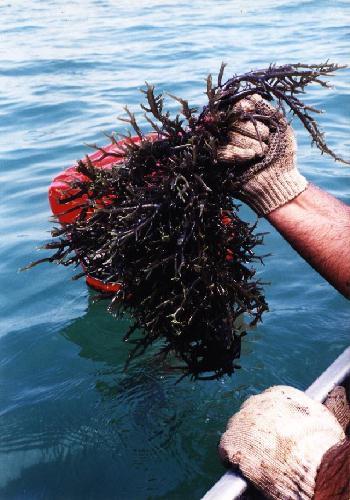
Use of Monascus sp. NP1 for bioethanol production from Cladophora glomerata

Cladophora

The fungus Monascus sp. was able to produce ethanol instead of red pigment under glucose derepression with greater and more tolerance to ethanol than yeast. Algae are known as a polysaccharide resource for bioethanol production. This work was focused on the optimization of cellulase production through solid-state fermentation of straw and rice bran usingTrichoderma viride TISTR 3161 for saccharification by the alga, Cladophora glomerata. The best conditions for alga enzymatic hydrolysis were proposed after varying crude enzyme and temperature, comparing…

Production performance, immune response and carcass traits of broiler chickens fed diet incorporated with Kappaphycus alvarezii

Kappaphycus alvarezii

This study evaluates the production performance, immune responses and carcass traits in broiler chickens (0 to 42 days) fed diet with incorporated Kappaphycus alvarezii (AF-KWP). Day-old chicks (280) were randomly distributed into 35 groups with 8 chicks in each group (7 dietary treatments × 5 replicates). Seven experimental diets were formulated by adding 0 (control—T1), 0.25 AF-KWP (T2), 0.50 AF-KWP (T3), 0.75 AF-KWP (T4), 1.00 AF-KWP (T5), 1.25 AF-KWP (T6) and 1.50 AF-KWP (T7) respectively. Body weight gain (g) significantly (P < 0.05)…

Screening cyanobacteria from marine coastal waters of Thailand for biohydrogen production

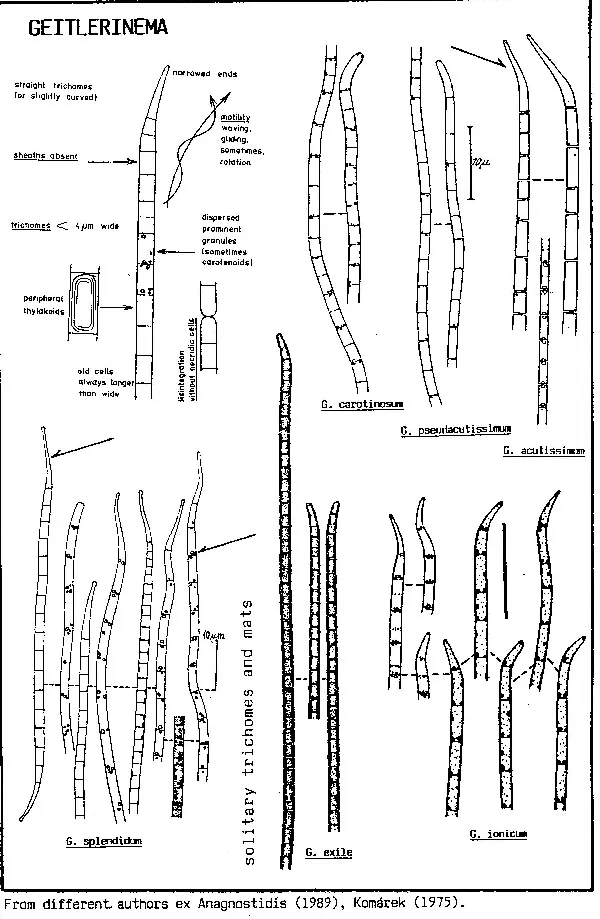
Geitlerinema

Cyanobacteria are prokaryotic organisms capable of oxygenic photosynthesis. H2 can be produced by cyanobacterial bidirectional hydrogenase, but mainly during anaerobic dark fermentation. Here, we screened H2 producing cyanobacteria isolated from marine environments in Thailand and optimized physiological conditions for maximizing H2production of the selected isolate. Most of the 54 cyanobacterial strains isolated and purified from samples of seawater, stones, sand, and shells in the Gulf of Thailand and the Andaman Sea, southern part of Thailand produced H2 when cells were…

Acid preservation of Saccharina latissima for application as a carbon source for fermentation to biofuels and chemicals

Saccharina_latissima

Cultivated kelps (brown algae) are a sustainable biomass resource and a potential feedstock for conversion to biofuels and chemicals. Due to seasonal variations, and a short period with optimal biomass composition, preservation and storage of the biomass is required for a year-round operation of a seaweed processing plant. For use of the biomass as a carbon source for fermentation to biofuels, only low-cost preservation methods are feasible. Preservation of Saccharina latissima (sugar kelp) by sulphuric and formic acid has been…

Effect of different drying techniques on the phytochemical content and antioxidant activity of Kappaphycus alvarezii

Kappaphycus alvarezii

The effect of different drying techniques on the phytochemical content and antioxidant activity of Kappaphycus alvarezii (‘crocodile’ morphotype) were investigated. Phytochemical (total phenolic, flavonoid, anthocyanin and carotenoid content) and antioxidant activity of the seaweed were determined. The seaweed was dried using seven types of drying techniques; oven drying (temperature of 40 °C), oven drying (temperature of 80 °C), sun drying, hang drying, sauna drying, shade drying and freeze drying. There were significant differences in the phytochemical content and antioxidant activity between the…