• (+86)21 80399582-801
  • Emergency Industrial Park,Wenzhou, Zhejiang , CN
  • tech.sales@leadingtec.cn

Author: leadingtec

Use of microalgae to recycle nutrients in aqueous phase derived from hydrothermal liquefaction process


Microalgae By Hydrothermal Liquefaction

Hydrothermal liquefaction (HTL) of microalgae biomass generates an aqueous phase (AP) byproduct with limited energy value. Recycling the AP solution as a source of nutrients for microalgae cultivation provides an opportunity for a cost-effective production of HTL based biofuel and algal biomass feedstock for HTL, allowing a closed-loop biofuel production in microalgae HTL biofuel system. This paper aims to provide a comprehensive overview of characteristics of AP and its nutrients recycling for algae production. Inhibitory effects resulted from the toxic…

Microalgal bio-based plastic products, do you understand?

“The reduction of carbon dioxide emissions and the use of renewable resources are common topics that the world is advocating. Bio-based plastics come from biological resources, can reduce the use of oil, have the advantages of low-carbon, environmental protection, and environmental friendliness. It seems that “universal” Where micro-algae have their presence, micro-algae-based bio-plastics and their products have also come out.” 1 Bioplastic mixed with microalgae and resin In 2017, the British company VivoBareFoot (a footwear manufacturer) and BLOOM (a manufacturer…

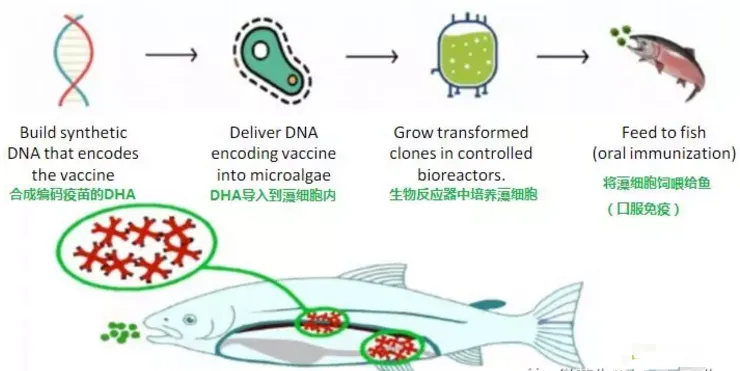
Microalgae Aquatic (Animal) Vaccines Coming Soon

In recent years, the aquatic industry has suffered from the frequent occurrence of aquatic animal diseases, which has caused huge economic losses to aquaculture enterprises and farmers each year. Aquatic animal vaccines have the characteristics of immune disease, safety, high efficiency, and no pollution (compared with antibiotics) and undoubtedly it’s the first choice for control of aquatic animal diseases. British MicroSynbiotiX company is developing a fish oral vaccine. The researchers introduced the synthetic DNA encoding the vaccine into the microalgae…

Archaeologist reveals: Spirulina is the true ancestor of mankind

Archaeology, as an industry that traces its origins to the ancient times, its practitioners must not only possess a profound historical foundation, but also must master the most advanced science and technology, because many historical mysteries can only be solved by applying modern technologies, such as the radioactive isotope C14 being archeological. Known as the “carbon bell,” it is prone to beta decay and becomes a new nucleus. Its half-life is 5730, and it can therefore be used to determine…

The potential of microalgal biomass production for biotechnological purposes using wastewater resources

chlorella sp.

The utilization of microalgae for wastewater treatment represents an attractive opportunity for wastewater valorization through the use of the produced biomass. Five strains of microalgae were isolated from municipal wastewater and grown in autoclaved and non-autoclaved effluent at 30 °C and 150 μmol photons m−2 s−1 to study biomass production, nutrient removal, and the biochemical composition of the biomass. All strains reached high biomass productivity (35.6 to 54.2 mg dry weight L−1 day−1) within 4 days of batch culturing. In this period, ammonium-N and phosphate…

High biomass production and CO2 fixation from biogas by Chlorella and Scenedesmus microalgae using tequila vinasses as culture medium

chlorella sp.

Tequila vinasses (TVs) generated during Tequila production are brown liquid residues rich in nutrients. The nutrient content of agro-industrial effluents represents an excellent resource to support low-cost biomass production of microalgae; nonetheless, it is crucial to select the suitable microalgal strain to attain the highest biomass production in each residue used. In this study, biomass production, CO2 fixation from biogas, and cell compound accumulation by Chlorella vulgaris U162, Chlorella sp., Scenedesmus obliquus U169, and Scenedesmus sp. using biodigested and filtered…

Polysaccharides extracted from Moroccan seaweed: a promising source of tomato plant growth promoters

Codium decorticatum

The present study investigates the use of seaweed polysaccharides as biostimulants of seed germination and plant growth. Seventeen species of Moroccan seaweeds were collected and screened for their crude polysaccharide content which ranged from 0.3 to 34% (dry weight basis). Chemical analyses of the obtained polysaccharide-enriched extracts (PEEs) were performed. Two bioassays were carried out to study seed germination and growth-promoting activity of PEEs. In the first experiment, the effect of PEEs on tomato seed germination was carried out under…

Effect of microalgae hydrolysate foliar application (Arthrospira platensis and Scenedesmus sp.) on Petunia x hybrida growth

GY-D13 Scendesmus obliquus

In horticultural practice accelerated plant development and particularly earlier flowering, has been reported with microalgae applications. Therefore, the objective of this work was to study the effects of foliar spraying with Scenedesmus sp. and Arthrospira platensis hydrolysates on Petunia x hybrida plant development and leaf nutrient status. Three treatments were tested: T1 (foliar application with water, the control), T2 (foliar application with Arthrospira), and T3 (foliar application with Scenedesmus). Foliar spraying was applied five times (0, 14, 28, 35, and…

The tropical carrageenophyte Kappaphycus alvarezii extract promotes axodendritic maturation of hippocampal neurons in primary culture

Kappaphycus alvarezii

Neurotrophic factors are essential to support neuronal development and to protect mature neurons from atrophy in neurodegenerative disorders. To investigate effects of the carrageenan-producing seaweed, Kappaphycus alvarezii, on the development and complexity of neuronal cytoarchitecture, ethanol extract of the seaweed was added to primary cultures of fetal rat hippocampal neurons. The neuronal morphology was observed under phase-contrast microscope and analyzed using ImageJ software. With an optimal concentration of 1 μg mL−1, the extract significantly increased axonal length, number of secondary axonal collateral…