
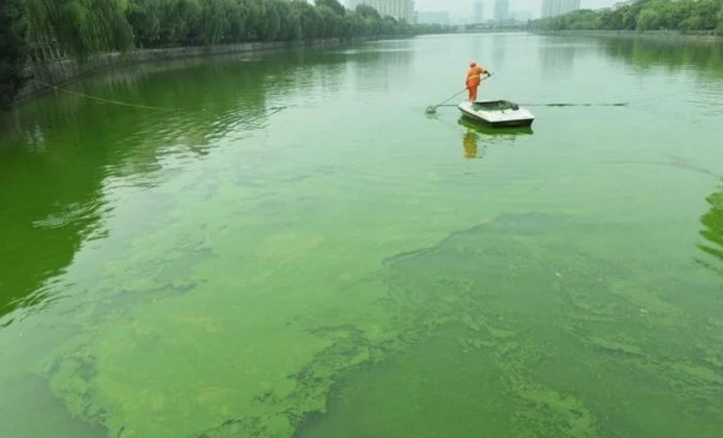
Archaeology, as an industry that traces its origins to the ancient times, its practitioners must not only possess a profound historical foundation, but also must master the most advanced science and technology, because many historical mysteries can only be solved by applying modern technologies, such as the radioactive isotope C14 being archeological. Known as the “carbon bell,” it is prone to beta decay and becomes a new nucleus. Its half-life is 5730, and it can therefore be used to determine the age of ancient organisms. Today’s topic is related to cyanobacterial archeology. Every summer, lakes such as Taihu Lake will have “blooms”, and Yellow Sea areas will also have “red tides”. Cyanobacteria have become an “environmental killer” that breeds and shuns the tourism industry. Recently, the Nanjing Institute of Geology and Palaeontology of the Chinese Academy of Sciences discovered the “large-scale Anhui filamentous algae” 800 million years ago in Shou County, Anhui Province, providing the earliest fossil evidence for the early biological nitrogen fixation in the Earth. Relevant results were published online February 2 in the “Cells” Publishing Group “Contemporary Biology” magazine.
Water bloom
In the bizarre nature, everything evolved from primary to advanced levels, and the cyanobacteria never seemed to be considered a high-level organism. However, recent studies have found that cyanobacteria is the earliest kind of evolutionary species. It is the oldest on Earth, and has a long survival time. One of the longest biological categories, it releases oxygen through photosynthesis and has the ability to fix nitrogen. Organisms usually cannot directly use the nitrogen in the air, and certain special types of cyanobacteria can convert nitrogen in the air into bioavailable nitrogen for biological absorption. The discovery of large-scale A. fulmarum provided an early record of reliable cyanobacterial fossils with alien cells from the Devonian (about 410 million years ago) to the early Neoproterozoic era (1 billion-7.2 billion years ago), providing early The earliest fossil evidence of biological nitrogen fixation.
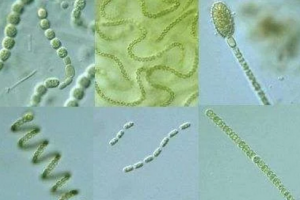
Cyanobacteria
The “oxygen-fixing nitrogen” function possessed by cyanobacteria provides the conditions for the later evolution of animals and plants. It can even be said that the birth of human beings is completely dependent on it. In this sense, cyanobacteria can be called human ancestors. Studies have found that in certain types of cyanobacteria, a structure capable of nitrogen fixation is called aberrant cells. Cyanobacteria with abnormal cells are direct evidence of early biological nitrogen fixation and their fossil records are rare. The large-scale A. philoxeroides found by the research team of the Chinese Academy of Sciences is a single-lined silk fossil that is surrounded by a thin layer of extracellular gelatin sheaths that can be preserved as silk fossils alone, and can also form benthic microbes together with other filamentous fossils. . Filaments are composed of multiple cells, and some of the vegetative cells appear in pairs and are daughter cells produced by lateral two divisions. Comparing with the structure of existing cyanobacteria, the study found that the large-scale A. genus, A. genus, is a cyanobacterial fossil with abnormal cells, probably originating from the early Neoproterozoic era. Alien cells are produced in response to the increase in oxygen concentration and the protection of oxygen-sensitive nitrogenases. Therefore, the biological characteristics of large-scale Anhui filamentous algae also confirmed the transformation of the earth’s redox environment in the early Neoproterozoic era.
Archeology seems to be a simple retrospective of history. In fact, the retrospect of archeology often plays an important role in enlightening the future, promoting the most advanced research, and stimulating the most advanced scientific research results. This is precisely why the nations of the world pay great attention to archaeology. The archaeological research of cyanobacteria may also lead to major innovations in environmental science.
