
In recent years, the aquatic industry has suffered from the frequent occurrence of aquatic animal diseases, which has caused huge economic losses to aquaculture enterprises and farmers each year. Aquatic animal vaccines have the characteristics of immune disease, safety, high efficiency, and no pollution (compared with antibiotics) and undoubtedly it’s the first choice for control of aquatic animal diseases.
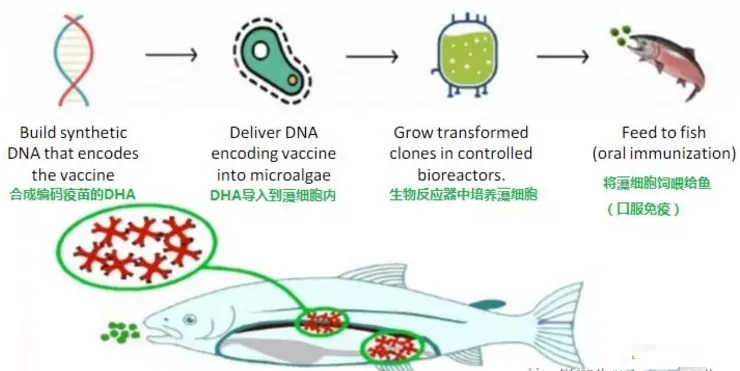
British MicroSynbiotiX company is developing a fish oral vaccine. The researchers introduced the synthetic DNA encoding the vaccine into the microalgae cells. The microalgae were cultivated in a fermentative manner. The algal cells produced and accumulated vaccines, and then the microalgae containing the vaccine were fed to the fish so that the vaccine was obtained in the fish.
The advantages of this fish oral vaccine are: (1) The isolation and extraction of vaccines is omitted, the production cost is about half of that conventional injections; (2) Cryopreservation and professional vaccination are not required.
MicroSynbiotiX obtained equity financing of a one million euro seed fund (approximately 7.8 million yuan). The company’s microalgae aquatic vaccine project won the Feed Tech Challenge launched by Nutreco (the world famous animal nutrition and fish feed company) in 2017 and the “Seafood” Innovation Award in Norway in 2018. (Seafood Innovation Award).
In addition to MicroSynbiotiX, there is TransAlgae in Israel, and Solarvest Bioenergy in Canada is also developing the use of microalgae to produce aqua vaccines.

TransAlgae Microalgae Breeding Factory


