
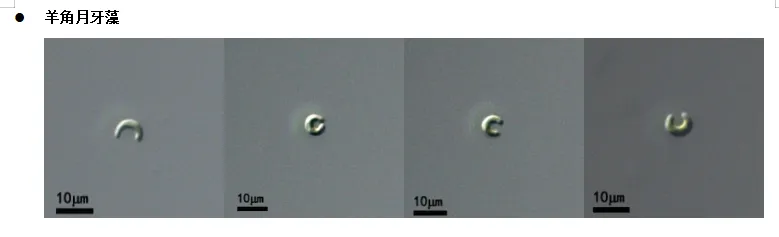
Culture medium:BG11
Classification
Research Applications
Selenastrum capricornutum is a freshwater green alga that was chosen as the subject of this study because it is widely distributed, easy to culture and able to degrade PAHs. The work examined the effects of heavy-metal ions, light and other factors on the adsorption, degradation and metabolism of PAHs by S. capricornutum, and the roles of algal active constituents and reactive oxygen species in PAH degradation. The detailed study of the degradation of high-ring PAHs is a useful addition to knowledge of microbial PAH degradation and provides a theoretical and practical basis for the bioremediation of PAH pollution in aquatic environments. The main findings are as follows: 1. For low-ring PAHs (fluorene and phenanthrene), heavy-metal stress significantly promoted removal. After 7 days of exposure to high metal concentrations (Cd2+ 0.10 mg/L, Cu2+ 1.0 mg/L, Ni2+ 2.5 mg/L, Zn2+ 1.0 mg/L), up to 99% of the fluorene and 89% of the phenanthrene in the medium were removed. For high-ring PAHs (fluoranthene, pyrene and benzo[a]pyrene), heavy metals had no effect on removal efficiency from the medium.
Product Forms
- Strain on solid medium in test tubes (can be shipped by express courier)
- Liquid strain culture (100 ml – 5 L packages)
- Large-volume algae culture (over 5 L, shipped by freight)
Product Prices
Other Algae Strain List


Reviews
There are no reviews yet.