

Shanghai Guangyu Biological Technology Co., Ltd. supplies Qingdao platymonas (Platymonas helgolandica tsingtaoensis) (GY-H1 Platymonas helgolandica tsingtaoensis) algae strains, culture media and related cultivation technology, as well as 1 L–5000 L photobioreactor culture equipment with temperature display, pH display, light intensity display, heating, water pump, air pump, auto-dimming LED light source and other algae culture accessories. You are welcome to contact us.
Culture medium:F/2
Guangyu Biotech also suppliesculture-media nutrients for large-scale microalgae cultivation.
Classification
Qingdao Platymonas (scientific name: Platymonas subcordiformis) is a common marine unicellular green alga belonging to the Chlorophyta, order Volvocales, family Chlamydomonadaceae. It is so named because it was first systematically studied in Qingdao waters, is widely distributed along the Chinese coast, and is an important live feed in aquaculture.
Main Characteristics
-
Morphology
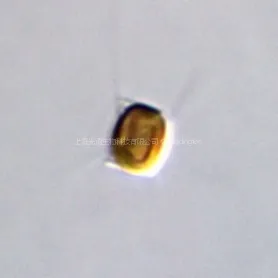
– Cells are flattened elliptical or ovate, about 10–20 μm long and 5–15 μm wide, bilaterally symmetrical, slightly pointed at the anterior end.
– It has four equal flagella and can swim freely.
– The cell contains a large, cup-shaped chloroplast, usually with one pyrenoid.
-
Ecological Habits
– Wide salinity range (15–35‰); suitable water temperature 15–30 °C, with an optimum of about 20–25 °C.
– Photosynthetic capacity is high, and mass proliferation readily occurs in eutrophic seas.
-
Reproduction
– Reproduction is mainly by asexual binary fission, and proliferation is rapid under suitable conditions.

Uses
Platymonas is a high-quality plant feed for the early larval stages of marine animals and is extremely important for their growth and development. It also provides good simultaneous enrichment of animal feeds such as rotifers, Moina and Artemia. Through photosynthesis, Platymonas can reduce and eliminate organic pollution and other harmful substances in hatchery water, supply ample oxygen, maintain a healthy culture ecosystem and thereby improve water quality.
Introducing Platymonas into marine hatchery water can lower ammonia and nitrite nitrogen, raise dissolved oxygen, and effectively improve larval survival and yield. Experiments showed that ammonia nitrogen was 31.5% lower than in the control, nitrite nitrogen 26.9% lower, dissolved oxygen 12.2% higher, and survival 6.3% higher. Different algal species differ somewhat in their water-quality effects. A mixed-algal approach favours a balanced supply of nutrients and thereby supports larval growth, development and successful metamorphosis. The selection and combination of strains is therefore central to microalgal ecological technology, and a promising direction for future hatchery practice.
Culture Methods
In artificial culture, a semi-continuous method is usually used, with sodium nitrate, potassium dihydrogen phosphate and other nutrients, and with light (2,000–5,000 lx) and aeration controlled, to achieve high-density culture.
Platymonas is highly adaptable and grows and multiplies rapidly, and is one of the easiest algae to culture. It is a high-quality feed for early larvae of shrimp, crabs, shellfish and other marine animals, rich in the vitamins and fatty acids they require. Common species are Platymonas helgolandica var. tsingtaoensis and P. subcordiformis. Iron uptake is relatively high, so iron should be supplemented in time to accelerate growth. At higher cell densities the culture can be purified with an appropriate concentration of chemicals, concentrated and stored at low temperature, and recultured in fresh medium when needed.
Product Forms
- Strain on solid medium in test tubes (can be shipped by express courier)
- Liquid strain culture (100 ml – 5 L packages)
- Large-volume algae culture (over 5 L, shipped by freight)



Reviews
There are no reviews yet.