

Functions and uses:Cell counting is an important step in algal culture, harmful algal bloom surveys and environmental monitoring. A light microscope, together withPlankton counting chamber, canTimed and fixed-point biomass analysis to determine cell growth status and proliferation; also for identifying and enumerating field samplesplanktonic plantsandprotozoaanimalsetc.; they can also be used to isolate and purify cultures.
Product description: high-transmittance ultra-clear glass, one-piece 304 stainless-steel or brass frame, hand-assembled, ground and calibrated under a dissecting microscope. The ruled version is used for plankton isolation and zooplankton counting, and is suitable for beginners and researchers with special requirements; the unruled version is suitable for microscopes with a graticule eyepiece and for researchers with special requirements.
Advantages and differences:
1. We use pure white glass; much of what is on the market is tinted glass, which affects the field of view.
2. Our ruling is machine-engraved; many products on the market are hand-ruled, with uneven, poorly visible lines. The lines are not too deep, so cells or dirt do not become trapped.
3. The material is 304 stainless steel or brass; many products on the market use 201 stainless steel, which rusts with prolonged use.
4. Compared with imported products of the same quality, our price is only 60–70% of theirs.
5. The metal edges are ground so they do not cut the hands; corners are not rounded, avoiding deformation of the metal frame that would trap bubbles under the cover glass.
6. An adhesive resistant to organic solvents, seawater and corrosion is used, so the chamber will not delaminate in long-term use.
Technical specifications:
Specification: 0.1ml/0.2ml/1ml/2ml/3ml
Material: high-transmittance ultra-clear glass, professionally mould-ruled, clear and regular.
Frame: one-piece 304 stainless-steel or brass retaining frame
Counting-area size: 20 mm × 20 mm / 50 mm × 20 mm
Ruling: unruled / 4×10 grid (50 mm × 20 mm) / 10×10 grid (20 mm × 20 mm)
Features: rounded corners on all sides, smooth and comfortable to handle. The counting area is ruled with a professional precision mould, line width about 20 μm (0.02 mm), high-grade, with clear, sharp lines.
Packaging: individually boxed, 1 slide per box
Instructions: several styles are available for different research needs. For algae, the 0.1 ml chamber is recommended; for protozoa, small zooplankton, rotifers and crustaceans, 1 ml is recommended; for strain isolation, 2 ml is recommended.
Notes: glass ruling comes in only two specifications; denser ruling is easily damaged or broken. Resin chambers can have more lines but are less durable.
Packing list:
| Model | Material | Volume | Ruling | Counting area |
| GY-JS1-a1 | stainless steel | 2 ml | grid ruling, 4 × 10 small squares | 50*20 |
| GY-JS1-a2 | brass | 2 ml | grid ruling, 4 × 10 small squares | 50*20 |
| GY-JS1-b3 | stainless steel | 2 ml | no ruling | 50*20 |
| GY-JS1-b4 | brass | 2 ml | no ruling | 50*20 |
| GY-JS1-c5 | stainless steel | 1 ml | grid ruling, 4 × 10 small squares | 50*20 |
| GY-JS1-c6 | brass | 1 ml | grid ruling, 4 × 10 small squares | 50*20 |
| GY-JS1-d7 | stainless steel | 1 ml | no ruling | 50*20 |
| GY-JS1-d8 | brass | 1 ml | no ruling | 50*20 |
| GY-JS2-a9 | stainless steel | 100 µl | grid ruling, 10 × 10 small squares | 20*20 |
| GY-JS2-a10 | brass | 100 µl | grid ruling, 10 × 10 small squares | 20*20 |
| GY-JS2-b11 | stainless steel | 100 µl | no ruling | 20*20 |
| GY-JS2-b12 | brass | 100 µl | no ruling | 20*20 |
| GY-JS2-c13* | stainless steel | 100 µl | grid ruling, 10 × 10 small squares | 20*20 |
| GY-JS2-c14* | brass | 100 µl | grid ruling, 10 × 10 small squares | 20*20 |
| GY-JS2-d15* | stainless steel | 100 µl | no ruling | 20*20 |
| GY-JS2-d16* | brass | 100 µl | no ruling | 20*20 |
| GY-JS2-e17 | stainless steel | 200 µl | grid ruling, 10 × 10 small squares | 20*20 |
| GY-JS2-e18 | brass | 200 µl | grid ruling, 10 × 10 small squares | 20*20 |
| GY-JS2-f19 | stainless steel | 200 µl | no ruling | 20*20 |
| GY-JS2-f20 | brass | 200 µl | no ruling | 20*20 |
| GY-JS3-a21** | stainless steel | 1 ml | no ruling | 50*20 |
| GY-JS3-a22** | brass | 1 ml | no ruling | 50*20 |
| GY-JS3-b23** | stainless steel | 1 ml | grid ruling, 4 × 10 small squares | 50*20 |
| GY-JS3-b24** | brass | 1 ml | grid ruling, 4 × 10 small squares | 50*20 |
*: GY-JS2-c and GY-JS2-d are the same size as a microscope slide, suitable for microscopes with a slide recess, and use ultra-thin glass so that an oil-immersion objective can be used.
**: GY-JS3, modelled on the original Sedgewick-Rafter Counting Chamber (manually calibrated volume 1 ml; a long, sliding cover glass avoids bubbles). Used for cell counts of ecological samples.

- Plankton / algae counting chamber GY-JS3-b24


- Plankton / algae counting chamber GY-JS3-b23


- Plankton / algae counting chamber GY-JS3-a22


- Plankton / algae counting chamber GY-JS3-a21


- Plankton / algae counting chamber GY-JS2-f20


- Plankton / algae counting chamber GY-JS2-f19


- Plankton / algae counting chamber GY-JS2-e18


- Plankton / algae counting chamber GY-JS2-e17


- Plankton / algae counting chamber GY-JS2-d16


- Plankton / algae counting chamber GY-JS2-d15


- Plankton / algae counting chamber GY-JS2-c14


- Plankton / algae counting chamber GY-JS2-c13


- Plankton / algae counting chamber GY-JS2-b12


- Plankton / algae counting chamber GY-JS2-b11


- Plankton / algae counting chamber GY-JS2-a10


- Plankton / algae counting chamber GY-JS2-a9


- Plankton / algae counting chamber GY-JS1-d8


- Plankton / algae counting chamber GY-JS1-d7


- Plankton / algae counting chamber GY-JS1-c6


- Plankton / algae counting chamber GY-JS1-c5


- Plankton / algae counting chamber GY-JS1-b4


- Plankton / algae counting chamber GY-JS1-b3


- Plankton / algae counting chamber GY-JS1-a2


- Plankton / algae counting chamber GY-JS1-a1

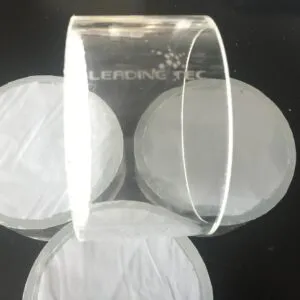
Features: all-glass construction, high transparency, clearer observation, whole-slide counting.

Plankton / algal counting chamber glass ruling

Plankton / algal counting chamber glass ruling

Plankton / algal counting chamber microscope grid

Plankton / algal counting chamber microscope grid
The counting method below is for reference; please follow your own experimental procedure:
Count the sample in the chamber under a 10×40 or 16×40 microscope, i.e. at 400–640× magnification. Count each bottle of sample twice and take the mean. About 50–100 fields of view are counted per slide, but the number may be adjusted according to phytoplankton density: if the average is no more than 1–2 cells per field, count more than 200 fields; if there are 5–6 per field, count 100 fields; if there are a dozen or so per field, 50 fields are sufficient. If the difference between the two counts of the same sample and their mean is no greater than ±15% of the mean, the mean is accepted as valid. Otherwise a third count must be made, until the difference between the mean of the three slides and the two closest values does not exceed 15% of the mean; the mean of those two closest values is then taken as the result.
During counting, some individuals often lie partly inside and partly outside the field of view; in that case, those in the upper half of the field may be counted and those in the lower half not counted. Abundance is best expressed as cell number; for colonies or filaments that are not easily counted as cells, the average cell number can be determined.
Live motile cells must be captured in the field of view; non-motile cells settle to the bottom, and fixed samples also rest on the bottom.
Notes:
1. If the biomass is too high, first dilute the sample, then add fixative (formaldehyde or Lugol’s iodine) before sampling and counting.
2. If bubbles form under the cover glass, use a smaller cover glass that sits entirely within the counting area, or skip the bubbles and do not count them.
Care of the counting chamber (even a good product needs proper care):
1. Do not wipe vigorously with coarse cloth, brushes or other hard objects, so as not to damage the counting area;
2. Do not wipe with a fluffy soft cloth; because of the high transparency, lint is easily seen. Please uselens clothWipe dry with this type of soft cloth.
3. After use, rinse the chamber with clean water and, withlens clothwipe the surface dry and store it in its case. Do not immerse it directly in organic solvents or alcohol.
Differences between zooplankton counting chambers and haemocytometers:
1. Plankton counting chambers are used mainly for plankton counts, generally at densities below 1 million cells per millilitre.
2. Haemocytometers are generally used for counts above 1 million cells/mL.
3. For cell counts below 1 million/mL, a plankton counting chamber is more accurate; haemocytometers use a conversion formula and have a larger error.
4. For publication, a plankton counting chamber and a Coulter counter are generally used.

Reviews
There are no reviews yet.