
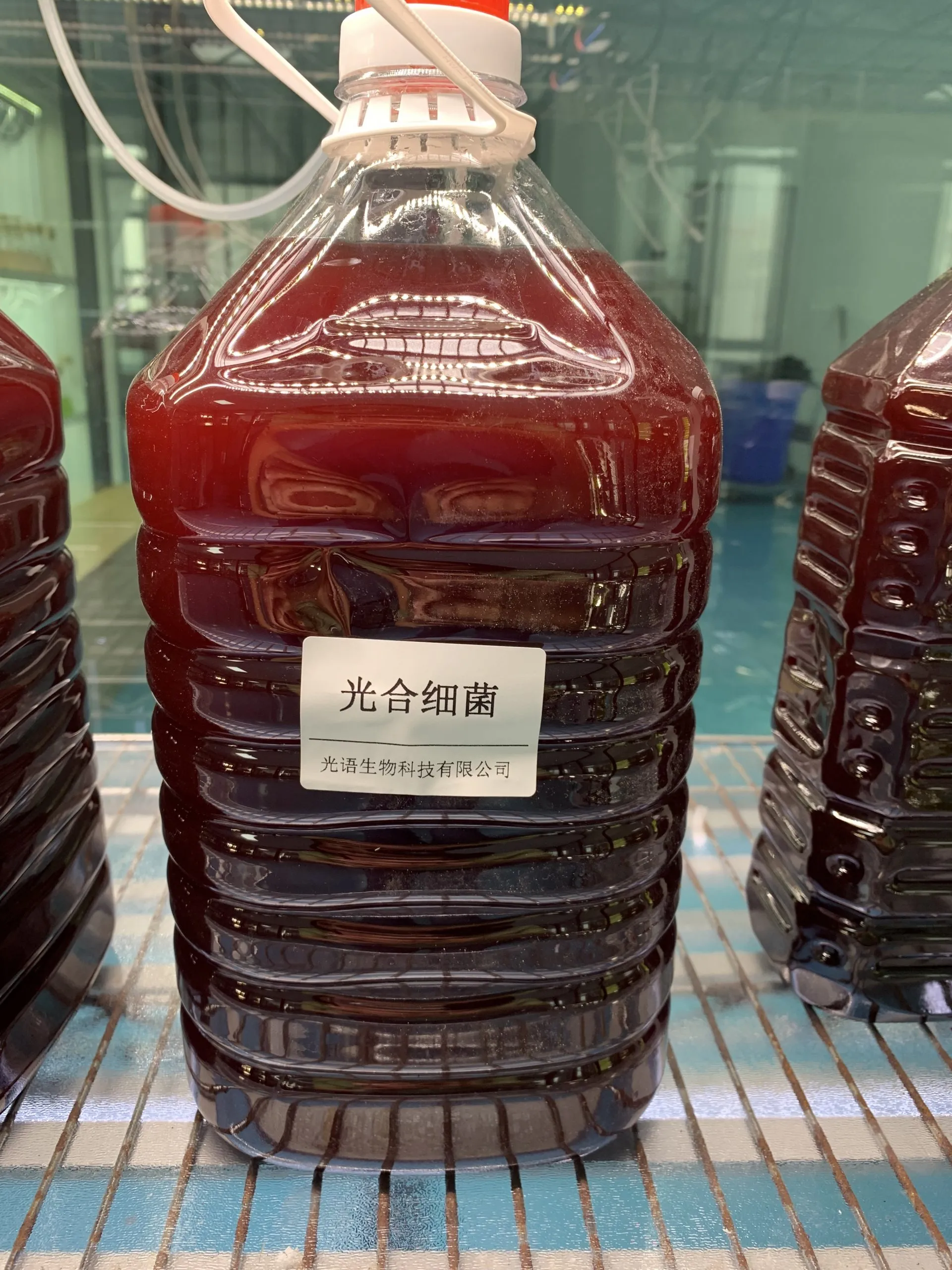
Shanghai Guangyu Biotechnology Co., Ltd. suppliesphotosynthetic bacteria (PSB)(PSB,Photosynthetic Bacteria)algae strains, culture media and related cultivation technology, as well as 1 L–5000 L photobioreactor culture equipment with temperature display, pH display, light intensity display, heating, water pump, air pump, auto-dimming LED light source and other algae culture accessories. You are welcome to contact us.
culture equipment, a photobioreactor for photosynthetic bacteria

photosynthetic bacteria (PSB) photobioreactor

Simple photobioreactor for photosynthetic-bacteria culture

photosynthetic bacteria (PSB) photobioreactor
culture medium
We supply photosynthetic-bacteria medium, about 440 g per pack, sufficient to scale up 100 kg of photosynthetic bacteria.

photosynthetic bacteria (PSB) culture medium nutrient salts
Photosynthetic-bacteria strain
We supply a pure strain of Rhodopseudomonas palustris. Customers are welcome to scale it up with our culture equipment and media — in-house culture is low-cost and genuine, without concerns about shipping damage or pigmented counterfeit products.
Differences between our photosynthetic-bacteria strain and commercial photosynthetic bacteria:
1. Commercial photosynthetic-bacteria products often add yeast extract and peptone to speed growth, but contaminating bacteria then grow rapidly and the culture becomes cloudy and viscous;
2. When commercial products are used as seed, photosynthetic bacteria often fail after no more than three generations, because faster-growing contaminants suppress them; an unnatural colour may also have been added with pigment;
3. Yeast extract and peptone should not be added when maintaining a seed culture. A genuine culture is red but not cloudy or viscous, and remains vigorous for dozens of generations.
4. Please purchase a pure Rhodopseudomonas palustris strain from Guangyu Biotech; do not use commercial photosynthetic-bacteria products as seed.
Guangyu photosynthetic-bacteria strains are supplied as primary and secondary inocula.
The primary strain is 300 yuan, supplied as 250 ml of primary inoculum plus one bag of medium and one 20 L culture bag.
The secondary seed culture is RMB 45/kg, excluding tax and freight, with no contamination-prone nutrients added, and can be subcultured for 30 generations without difficulty
3-tonne photosynthetic-bacteria package: strain + medium + photobioreactor = 5,500 yuan
Basic composition:
1. Photosynthetic bacteria: 20 kg of secondary Rhodopseudomonas palustris seed. If the first culture fails, a replacement seed culture will be sent free of charge.
2. Photosynthetic-bacteria medium: 30 packs of 440 g, each sufficient to scale up 100 kg of culture, i.e. 3 tonnes in total.
3. Photobioreactor for photosynthetic bacteria: a 60–100 L culture unit with temperature display, light-intensity display, heating, a water pump and a built-in LED light source.
Culture steps:
1. Dissolve one bag of medium (440 g) in 100 kg of tap water that has been left to stand for two days;
2. Take 10–20 kg of secondary photosynthetic-bacteria culture, add it to the medium and mix well;
3. Place the mixed bacterial culture in a photobioreactor at 30–35 °C, with the circulating pump and lighting running 24 h a day. After 4–5 days a bright-red photosynthetic-bacteria culture is obtained.
Market comparison:
The market price for 3 tonnes of photosynthetic bacteria is 7,500 yuan. For the same 3 tonnes, including the strain, medium and photobioreactor, our price is only 5,500 yuan.
Advantages:
1. High quality: the strain is highly pure and subcultures well; the medium contains no yeast or other organics, avoiding contamination; the reactor has a long service life; closed culture allows the bacteria to grow in a constant environment, with a short cycle and high density, up to 10 billion cells per millilitre.
2. Sustainability: the strain can be stored in a refrigerator at 4 °C for up to 2 months and, when recultured, needs no special activation — it can be cultured directly.
3. Peace of mind: photosynthetic bacteria are cultured in a closed photobioreactor, effectively excluding contamination; the medium contains no yeast or other organics, avoiding contamination. The resulting culture is highly pure and effective, and can be used with greater confidence.
4. Technical support: after purchasing a package, we provide technical advice and services on photosynthetic-bacteria culture, and are committed to creating maximum value for the user.
Photosynthetic bacteria can carry out photosynthesis in an illuminated, oxygen-deficient environment., they carry out photosynthesis with light energy and assimilate carbon dioxide. Unlike green plants, their photosynthesis is anoxygenic. Photosynthetic bacterial cells have only one photosystem, PSI, and the primary hydrogen donor is not water but H2S (or certain organic compounds). Photosynthesis therefore produces H2, decomposes organic matter, and can also fix atmospheric molecular nitrogen to form ammonia. In the course of their assimilatory metabolism, photosynthetic bacteria thus carry out three chemically important processes in natural element cycles: hydrogen production, nitrogen fixation and the breakdown of organic matter. These distinctive physiological traits give them an important place in the ecosystem.
The photosynthetic bacteria used in aquaculture are mainly photoheterotrophic members of the Rhodospirillaceae, for example Rhodopseudomonas palustris;
In natural fresh and seawater there are usually nearly a hundred PSB cells per millilitre. The cells use organic acids, amino acids, ammonia, sugars and other organics, and hydrogen sulphide, as electron donors, obtain energy by photophosphorylation, and under illuminated aquatic conditions can directly degrade organic matter and H2S while multiplying, thereby purifying the water.
In addition, the cells contain the carbon-storage substances glycogen and poly-β-hydroxybutyrate, coenzyme Q, antiviral substances and growth-promoting factors, giving them high feed value and broad prospects in aquaculture. Under anaerobic, illuminated conditions, PSB can use low-molecular-weight organics such as lower fatty acids, various dicarboxylic acids, alcohols, sugars and aromatic compounds as electron donors for photosynthesis, and grow photoheterotrophically.
In the dark they can use organic matter as a respiratory substrate for aerobic or heterotrophic growth. Photosynthetic bacteria can not only assimilate CO2 with light energy under anaerobic, illuminated conditions, but can also, under some conditions, fix nitrogen and produce hydrogen via nitrogenase. Some strains can also produce hydrogen in the dark under anaerobic conditions through the pyruvate metabolic system. They can use many organic substances such as organic acids, alcohols and sugars, and can transform certain toxic substances such as H2S and some aromatic compounds. Through biotransformation, PSB can synthesize a non-toxic, side-effect-free microbial protein rich in nutrients, improving the environment and providing a high-quality feed ingredient for aquaculture. The cells contain vitamin B12, biotin, pantothenic acid, carotenoids, chlorophyll and folic acid (involved in haematopoiesis and haemoglobin formation) at levels far higher than in ordinary microbes, including in particular the D-isomer of biotin, which cannot be synthesized artificially.
These substances have marked physiological activity in animals. In aquaculture ponds, a gradient of dissolved oxygen from the surface to the bottom divides the water into aerobic and anaerobic zones. The surface supports vigorous biological activity and generally better water quality; the bottom accumulates fish and shrimp faeces and uneaten feed. The abundant organic matter supports rapid microbial growth, which consumes large amounts of oxygen and creates an anoxic bottom layer in which sulphate-reducing bacteria proliferate and produce hydrogen sulphide and acids harmful to fish and shrimp. These bottom conditions are exactly those favoured by photosynthetic bacteria: anoxia, and light filtered through the overlying aerobic water so that wavelengths of 450–550 nm suitable for their growth are available. Photosynthetic bacteria use the bottom wastes, leftover feed, and toxic hydrogen sulphide and acids as substrates, multiply, raise dissolved oxygen, regulate pH, and lower ammonia, nitrite and nitrate nitrogen. Accumulated sludge decreases, algae and microorganisms increase, and the water is purified.
PSB can carry out photosynthesis, aerobic respiration, nitrogen fixation and carbon fixation, and are rich in protein, vitamins, growth-promoting factors, immune factors and other nutrients. Functionally they can compare with antibiotics and are safer, making them a promising field of bioengineering research. Photosynthetic-bacteria preparations also have distinctive disease-resistance and growth-promoting effects, greatly improving production performance, and show increasing potential in application. They also have broad prospects in water purification, fish and shrimp culture, livestock and poultry feeding, organic fertilizer and the development of new energy.
Reviews
There are no reviews yet.