Shanghai Guangyu Biological Technology Co., Ltd. supplies Alexandrium tamarense (GY-H31) algae strains, culture media and related cultivation technology, as well as 1 L–5000 L photobioreactor culture equipment with temperature display, pH display, light intensity display, heating, water pump, air pump, auto-dimming LED light source and other algae culture accessories. You are welcome to contact us.
Culture medium:F/2
Classification
Dinophyta, order Peridiniales, family Gonyaulacaceae, genus Alexandrium
Basic Information
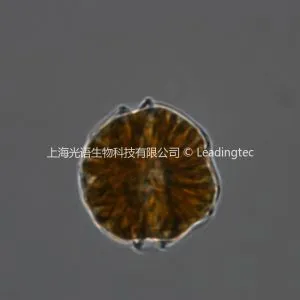
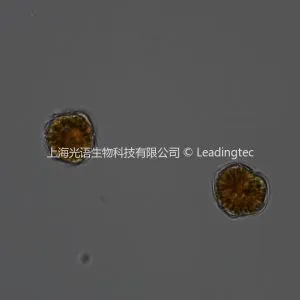
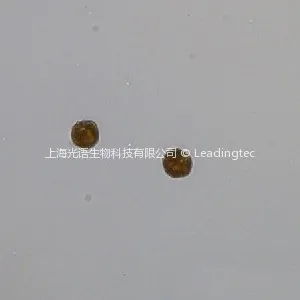
The cell is spherical, slightly longer than wide, 20–42 μm long and 18–40 μm wide. The epitheca and hypotheca are hemispherical and similar in size. The epitheca has projections at both shoulders; the hypotheca is asymmetrical, the right half shorter than the left. There are no spines or projections at either end; the antapex is slightly concave. The cingulum is deep and central, and its descending displacement equals its width. The sulcus is deep and wide posteriorly; the thecal plates are thin. This species often forms toxic blooms.
Distribution
The species is widely distributed and blooms more frequently in warmer seas. Blooms have been recorded in the Sea of Japan, the Philippines, Malaysia, Egypt, Spain, Argentina, Italy, the United States, Australia, Hong Kong and elsewhere. In Chinese waters it has been found in Dapeng Bay in the South China Sea, Xiamen waters and Jiaozhou Bay, and blooms of this species should be watched for.
Basic Characteristics
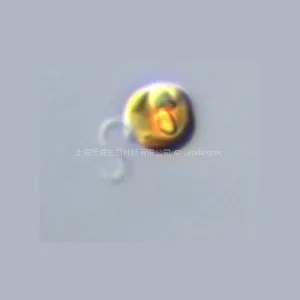
The cell is nearly circular, with similar hemispherical epitheca and hypotheca, 20–42 μm long and 17–44 μm wide. The cingulum is clearly left-handed. There are two flagella, and the cell rotates fairly rapidly.
Salinity
Alexandrium tamarense has a relatively wide salinity tolerance. It can grow at salinities of ρ = 14–32.1 g/L, with optimum growth at ρ = 23–27 g/L. At all salinities the maximum growth rate occurs 6–8 days after inoculation.
Temperature
For Alexandrium tamarense, θopt = 15–25 °C; at θ > 30 °C, all cells die after 10 days of culture. At an inoculum of 400 cells/mL, the highest cell density is reached 18–22 days after inoculation, and the maximum growth rate occurs at 6–8 days. In microalgal ecology, species that grow well at 10–35 °C are mesophilic, and are further divided by whether the optimum is 15–25 °C or 20–30 °C. This experimental strain is therefore a mesophilic, lower-temperature strain, like Japanese and US strains and unlike the Taiwan strain.
When the surrounding water is below 12.5 °C, Alexandrium tamarense can still survive but completely loses vertical-migration behaviour; when the temperature rises to 13.8 °C, rhythmic diel vertical migration reappears. Indoor physiological experiments show that the Hong Kong strain of A. tamarense has an extreme tolerance range of about 10–29 °C, a possible survival range of 11–28 °C, and an optimum growth temperature of 20–24 °C. Temperatures below 12.5 °C are therefore already close to its lower survival limit.
Ecological Impact
Alexandrium tamarense (Alexandrium tamarense) is a globally distributed toxic dinoflagellate and an important bloom-forming species whose toxins are transferred through the food chain as paralytic shellfish poisoning (PSP) toxins, posing a serious risk to aquatic environments and human health. Alexandrium tamarense cultured from cysts isolated from Hong Kong sediments is toxic and contains so-called PSP toxins, mainly gonyautoxin-2 at 9.4 pg/cell, with a minor component, the N-sulfocarbamoyl derivative C4 of gonyautoxin-4, at 1.567 pg/cell. Bioassays gave a PSP toxicity of (3.23–4.11)×10 MU/cell. A. tamarense and its cell homogenate delayed the development of the rotifer Brachionus plicatilis, lengthening the pre-reproductive period, shortening the reproductive period and lifespan, lowering age-specific fecundity and reducing egg production, thereby reducing fertility and impeding population growth.
This species can produce paralytic shellfish poisons (PSP).
Product Forms
- Strain on solid medium in test tubes (can be shipped by express courier)
- Liquid strain culture (100 ml – 5 L packages)
- Large-volume algae culture (over 5 L, shipped by freight)





Reviews
There are no reviews yet.