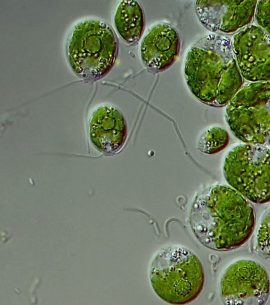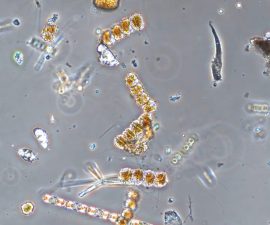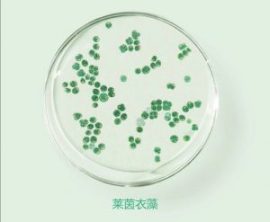

In the vast aquatic world, there lives a kind of algae with a unique form and certain value – Aphanizomenon.
Aphanizomenon is a filamentous cyanobacteria with a beautiful and unique form. It consists of multiple cells arranged in a bead-like manner, forming slender filamentous bodies. Each filament is like an exquisite green silk thread, swaying gracefully in the water. The cells of Aphanizomenon are cylindrical, with a thin cell wall on the outside and rich cytoplasm and organelles inside.
From the appearance, the color of Aphanizomenon is usually blue-green or olive green, making them particularly conspicuous in clear waters. Their filamentous bodies sometimes intertwine and entangle with each other, forming complex and beautiful patterns, as if they were works of art in the water. The length and thickness of Aphanizomenon may vary depending on environmental conditions and growth stages, some are short and thin, while others are long and thick.
In the ecosystem, Aphanizomenon has non-negligible value. Firstly, it is an important primary producer in the aquatic ecosystem. Through photosynthesis, Aphanizomenon can convert inorganic substances into organic substances, providing a rich source of food for other organisms in the water area. Many planktonic animals and small fish feed on Aphanizomenon, thus building a complex food chain and food web.
Secondly, Aphanizomenon plays a certain role in water purification. They can absorb nutrients such as nitrogen and phosphorus in the water, thereby reducing the degree of eutrophication of the water body. When the content of nitrogen and phosphorus in the water is too high, it is easy to cause a large-scale reproduction of algae, triggering the phenomenon of algal bloom and destroying the ecological balance of the water. The existence of Aphanizomenon can alleviate this situation to a certain extent and help maintain the ecological health of the water body.
In addition, Aphanizomenon is also of great significance in scientific research. Due to its unique form and physiological characteristics, scientists can study Aphanizomenon to deeply understand the growth, reproduction and metabolic mechanisms of algae. This not only helps us better understand the role of algae in the ecosystem but also provides a theoretical basis for the development of new biotechnologies and environmental protection strategies.
However, the massive reproduction of Aphanizomenon may also bring some problems. In some cases, such as when the eutrophication of the water body is severe, Aphanizomenon may overgrow and form algal blooms. The appearance of algal blooms will consume a large amount of oxygen, resulting in a decrease in the dissolved oxygen content in the water and posing a threat to other aquatic organisms. At the same time, some Aphanizomenon may also produce toxins, posing potential hazards to the water ecology and human health.
In order to better utilize the value of Aphanizomenon and avoid its negative impacts, we need to strengthen the monitoring and management of the water environment. Reasonably control the discharge of nutrients such as nitrogen and phosphorus, maintain the ecological balance of the water body, and create a good living environment for Aphanizomenon and other aquatic organisms.
In conclusion, as a unique aquatic organism, Aphanizomenon occupies a place in the aquatic world with its beautiful form and important ecological value. We should study and understand it deeply to achieve scientific utilization and effective management, so that Aphanizomenon can better serve humanity and nature.
If you want to know more about algae, please contact us. We are a company that works on algae and photoreactors. We are serious about algae!
Note: Images are from Baidu Baike.