
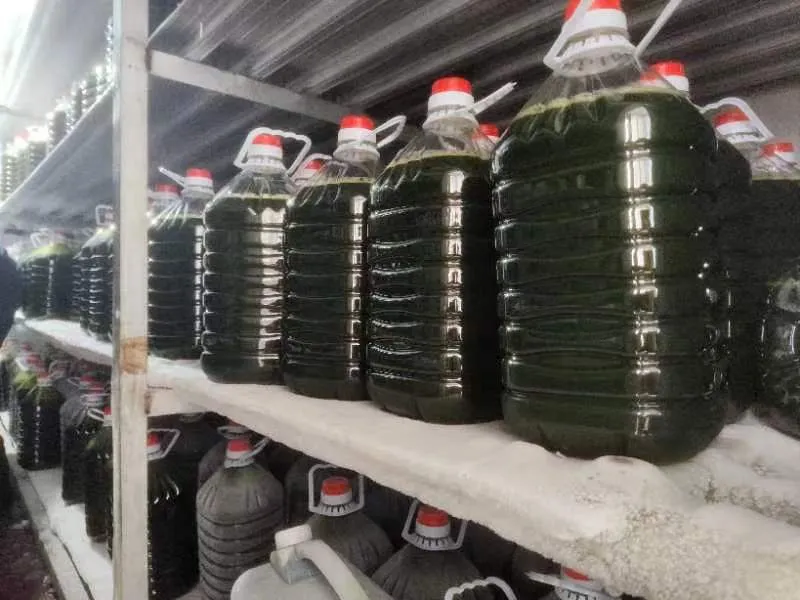
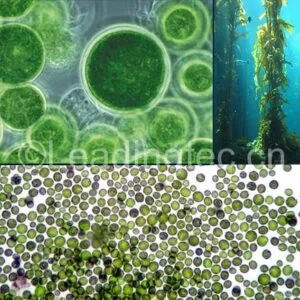
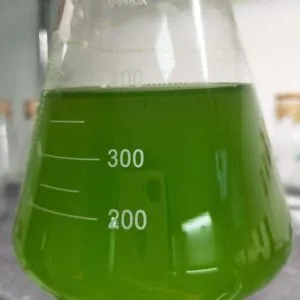
Guangyu marine Nannochloropsis concentrateAs a highly active microalgae product, it plays an important role in many fields because of its distinctive biological properties.Concentrated with an imported German centrifuge to 35 billion algal cells per millilitre!
Guangyu seawater Nannochloropsis isAutotrophically grown, harvested and centrifugally concentrated algal culture. It can be stored frozen. After centrifugation or filtration, the marine Nannochloropsis concentrate remains viable for more than 180 days at −18 °C, avoiding the long scale-up cycles and high shipping costs of conventional liquid cultures.


Its main uses are outlined below from the perspectives of aquaculture, environmental remediation, bioenergy and high-value product development:
1. Improving aquaculture performance
1. A high-quality live-feed source
Nannochloropsis concentrate is rich in protein (14.5–47%), omega-3 polyunsaturated fatty acids (EPA can reach 12.74%) and carotenoids, and can be used directly as starter feed for fish, shrimp and crab larvae. For example, a diet containing 10% Nannochloropsis has been reported to increase Nile tilapia weight gain by 123%, while also improving immunity and reducing pathogen infection (published studies).
2. Water-quality management
It rapidly absorbs ammonia nitrogen, nitrite and other harmful substances (nitrogen and phosphorus removal of 95–100%) and releases oxygen, raising dissolved oxygen and helping prevent surface gasping. Competitive growth also suppresses blooms of cyanobacteria and filamentous algae.
2. Environmental remediation and pollution control with Guangyu marine Nannochloropsis concentrate
1. Wastewater treatment
Under mixotrophic conditions, Nannochloropsis can efficiently degrade organic matter in industrial wastewater (COD removal 60–90%) and simultaneously remove heavy metals (copper and zinc removal above 64%). For example, culture on brewery wastewater can yield 1.0–1.4 kg of biomass per 1,000 L of wastewater while recovering nitrogen and phosphorus.
2. Carbon sequestration and greenhouse-gas reduction
Nannochloropsis has a strong photosynthetic carbon-fixation capacity, capturing 0.7–1.3 kg of CO2 per cubic metre of culture. At scale, this can be used in carbon markets and support carbon-neutrality goals.
3. Bioenergy development
1. Feedstock for biodiesel
The lipid content of Nannochloropsis can reach 39.8% of dry weight, far higher than conventional oil crops (soybean yields only about 440 L/ha·year). The lipids can be converted to biodiesel by transesterification, with a potential output of 15,000–80,000 L/ha·year, offering both environmental and economic benefits.
2. Co-production of biocrude
Coupled with pyrolysis, volatile fatty acids (VFAs) can be recovered from the algal residue, improving lipid conversion and lowering biofuel production costs.
4. Development of high-value products
1. Functional foods and dietary supplements
Nannochloropsis oil contains ≥ 20 g EPA per 100 g and has been approved in China as a new food ingredient. It is suitable for dietary-supplement development, with a recommended intake of ≤ 2 g/day, and may support cardiovascular health and anti-inflammatory function.
2. Biofertilizer and agricultural uses
After lipid extraction, the algal residue is rich in nitrogen (52.9 mg/g), phosphorus (12.4 mg/g) and trace elements. Used as a biofertilizer, it has been reported to raise tomato sugar content by 33% and double Moringa yield, and it meets EU fertilizer standards.
3. Cosmetic ingredient
Antioxidant constituents such as β-carotene and lutein can be used in anti-ageing skincare to support the skin barrier.
5. Technical innovation and overall benefits
1. A circular-economy model
For example, culture on brewery by-products (wastewater and spent grain) can form a closed loop of wastewater treatment, feed production and biofertilizer co-production, with essentially no wasted resources. Treating one million litres of wastewater can co-produce 0.4–0.8 tonnes of omega-3 lipids and 1.2–2.0 tonnes of fertilizer.
2. Techno-economic advantages
At scale, the carbon footprint is reduced 20-fold (0.005 kg CO2-eq/MJex) and biomass cost falls to USD 23.08/kg, significantly better than conventional fishmeal feed.
Summary
Marine Nannochloropsis concentrate supports a full value chain from aquaculture improvement and environmental remediation to high-value products. The technical core is efficient carbon fixation, pollutant conversion and enrichment of bioactive compounds. Future value can be increased by genetically improving strains or by developing co-production systems.


Reviews
There are no reviews yet.