
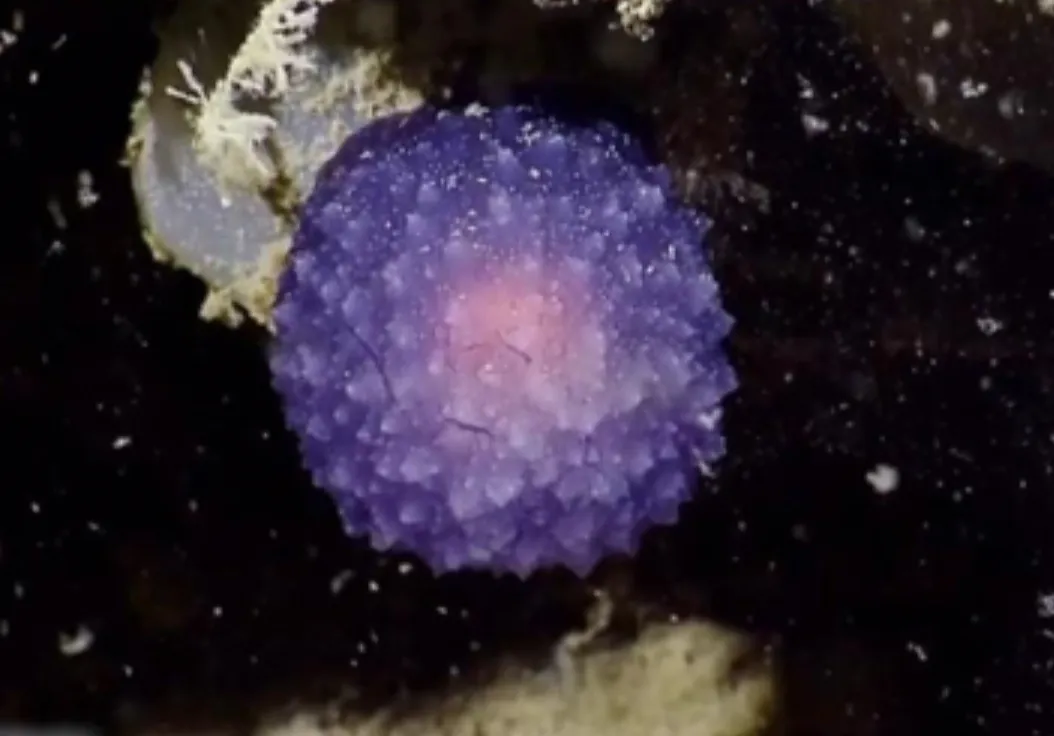
The algal species known as the “red treasure” by scientists can be found in seawater, fresh water and moist soil, and that is the purple spherical algae.
In terms of morphology, purple spherical algae usually exist as single cells and they often gather irregularly together. Most of their cells are spherical in shape and have a bright blood red or dark purple color, just like glittering precious stones in nature. Each cell is wrapped with a thin mucilaginous membrane. In moist environments such as on soil and walls, they often form red or light brown flakes, and when dry, they present a crust-like appearance. Inside the cell, there is an axially stellate or irregularly shaped pigment body and a sheathless protein nucleus, and these structures endow purple spherical algae with unique appearance and physiological characteristics.
From the perspective of application fields, purple spherical algae have important scientific research value and provide rich materials and objects for the study of algal biology. In practical application aspects, purple spherical algae also perform outstandingly. It can produce abundant phycobiliprotein. About 50% of the purple spherical algae protein is phycobiliprotein, and 84% of which is especially B-phycobiliprotein with stable properties. This protein not only has a high content but also has stable properties. Phycobiliprotein has potential application value in fields such as biochemistry and medical research. Purple spherical algae cells can also accumulate a large amount of polysaccharides. Purple spherical algae cells can accumulate 20% to 50% of the polysaccharides of biomass. This polysaccharide is a polymer composed of monosaccharides such as xylose, glucose, and galactose, with unique colloidal properties and high viscosity, and its structure is similar to that of alginate and alginate starch. These polysaccharides may have important uses in the food and chemical industries. In addition, in the fatty acid composition of purple spherical algae, there is a considerable proportion of polyunsaturated fatty acids, among which fatty acids account for about 9.5% of the biomass and more than 50% are unsaturated fatty acids. This has positive significance for the fields of nutrition and health.
With the continuous deepening of research on purple spherical algae, it is believed that it will show its unique value in more fields and bring more surprises and contributions to human life and scientific research.
If you want to know more about algae knowledge, please contact us. We are a company that does algae and light reactors. When it comes to algae, we are serious!
Note: The picture is from Toutiao, Sina.com, Mengshu’s Wanzi, “The deep sea exploration of the expedition team discovers mysterious purple water ball creatures!”.


