

Shanghai Guangyu Biological Technology Co., Ltd. supplies Gymnodinium catenatum (GY-H65 Gymnodinium catenatum) algae strains, culture media and related cultivation technology, as well as 1 L–5000 L photobioreactor culture equipment with temperature display, pH display, light intensity display, heating, water pump, air pump, auto-dimming LED light source and other algae culture accessories. You are welcome to contact us.
Culture medium:F/2


Classification
|__Kingdom: Plantae
|__Phylum: Dinophyta (dinoflagellates)
|__Class Dinophyceae
|__Order: Peridiniales
|__Family Peridiniaceae
|__Genus Gymnodinium (Akashiwo)
|__Gymnodinium catenatum
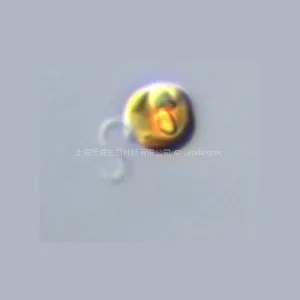
The organism is unicellular, spherical, elliptical or ovate, and dorsiventrally flattened. The cingulum is distinct, usually left-handed and only rarely right-handed, dividing the cell into epitheca and hypotheca; the ventral sulcus varies in length and usually extends slightly into the epitheca. Cells are naked or have a thin wall of many similar polygonal plates; the surface is smooth, only rarely with striae or longitudinal ribs. There are two flagella. Chromatophores are numerous, disc-, narrowly elliptical or rod-shaped, parietal or radially arranged, and yellow, brown, green or blue. Some species have phycobilins. Some lack chromatophores and are heterotrophic. An eyespot may or may not be present. There is a single mesokaryotic nucleus.
Ecological Impact
Gymnodinium catenatum is a motile organism of estuaries and bays. During blooms, cells occur throughout the water column, and cysts are found in the sediment. The minimum growth temperature is 4 °C and the maximum 30 °C. Growth is weak at 4–12 °C (Tasmanian strain) and does not occur at 11 °C. Blooms occur at 12–18 °C and end when the ambient temperature falls below 10 °C. Growth is very poor at 25–3 °C (Tasmanian strain). Rapid growth occurs at 17–28 °C, with an optimum of 18–22 °C. At 35 °C the alga can be killed in 30 minutes to a few hours. Minimum salinity is 15‰ and maximum 35.5‰.
The toxins produced by Gymnodinium catenatum (shellfish toxins and gymnodimine) belong to the paralytic shellfish poisons (PSP). Studies show that most outbreaks occur at temperatures below 25 °C. When the cells are eaten by shellfish (oysters, mussels, scallops), the toxins are released and can poison consumers. In extreme cases they cause muscle paralysis, respiratory difficulty and even death.
Product Forms
- Strain on solid medium in test tubes (can be shipped by express courier)
- Liquid strain culture (100 ml – 5 L packages)
- Large-volume algae culture (over 5 L, shipped by freight)


Reviews
There are no reviews yet.