

Shanghai Guangyu Biological Technology Co., Ltd. supplies Phaeocystis globosa (GY-H37) algae strains, culture media and related cultivation technology, as well as 1 L–5000 L photobioreactor culture equipment with temperature display, pH display, light intensity display, heating, water pump, air pump, auto-dimming LED light source and other algae culture accessories. You are welcome to contact us.
Culture medium:F/2
Guangyu Biotech also suppliesculture-media nutrients for large-scale microalgae production.


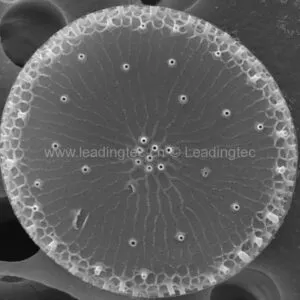
Phaeocystis belongs to the Haptophyta (Prymnesiophyceae) and is a planktonic alga with two life forms: motile unicells and colonial gelatinous colonies. It is one of the most widely distributed marine phytoplankton. It can cause blooms that affect marine ecosystems and socio-economic development, and also plays an important role in the global carbon and sulphur cycles, marine food-web structure and climate regulation.
Phaeocystis colonies are made up of thousands to tens of thousands of cells. The gelatinous colony grows from small to large, and its colour changes from pale green through dark green and light brown to coffee-brown. Colonial envelopes are spherical or ovoid, 110 μm to 2.6 cm in size. Colonies less than 150 μm in diameter are almost solid spheres, with cells unevenly distributed and only 3.1–5.2 μm in size. Once the diameter exceeds 200 μm the colony is hollow, cells are evenly distributed on the surface and cell size increases to 6.2–7.4 μm; the two cup-shaped chromatophores of colonial cells lie opposite each other along the cell wall. Motile unicells are usually spherical or nearly so, slightly concave at the anterior end, 2.5–7.0 μm in diameter, with two almost equal flagella about 1.5–2 times the body length, one beating forwards in a wave and the other directed obliquely backwards, plus a short anterior haptonema. There are 2–3 parietal, disc- or plate-like, yellowish-brown chromatophores. Cells multiply by repeated division.
Harmful Algal Bloom Hazards
First, the spherical colonies of this alga have a soft mucilaginous envelope and the cells contain polysaccharides. When they bloom in large numbers, the gelatinous, sugar-containing colonies cling tightly to fish gills, impairing respiration and feeding and causing the fish to suffocate, become hypoxic and die.
Second, the enormous biomass of this alga (especially at dawn and dusk) can cause hypoxia and disaster. In addition, when the cells die and decay they produce haemolytic toxins and other toxic substances; damage to the water lasts for some time and, in severe cases, can cause extensive fish mortality, with even greater harm to cage culture and shrimp hatcheries.
In 2012 a large algal bloom occurred in Antarctic waters; the MODIS instrument on NASA’s Terra (“Earth”) satellite captured several images. Scientists concluded that the bloom was caused mainly by Phaeocystis.
Product Forms
- Strain on solid medium in test tubes (can be shipped by express courier)
- Liquid strain culture (100 ml – 5 L packages)
- Large-volume algae culture (over 5 L, shipped by freight)


Reviews
There are no reviews yet.