

Shanghai Guangyu Biological Technology Co., Ltd. supplies Haematococcus pluvialis (GY-D2) algae strains, culture media and related cultivation technology, as well as 1 L–5000 L photobioreactor culture equipment with temperature display, pH display, light intensity display, heating, water pump, air pump, auto-dimming LED light source and other algae culture accessories. You are welcome to contact us.
Guangyu Biotech also suppliesculture-media nutrients for large-scale microalgae production.
The company provides feasibility analysis and consulting for investment in large-scale engineered Haematococcus culture, as well as technical problem-solving during culture, and can recommend experienced engineers.


Classification
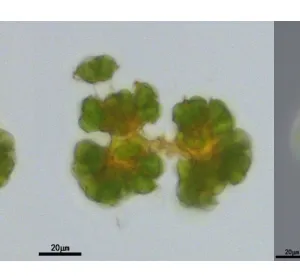
Under normal conditions Haematococcus pluvialis is green.

Haematococcus pluvialis in normal (green) culture
It turns red only under inductive conditions. In the red-spore (aplanospore) form, cells convert to motile cells when medium is added and light is low.

Appearance of Haematococcus pluvialis after induction (ripening)
The culture equipment and engineering required differ according to the process and the strain. Please contact our engineers for details.
There are ten Haematococcus pluvialis strains in all, from Hawaii, Yunnan, Hubei, Hunan, Fujian and elsewhere — strains acclimated in industrial projects, which customers may purchase as needed.

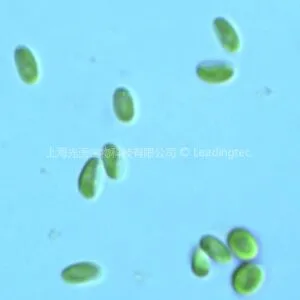
Haematococcus pluvialis solid-plate strain

Haematococcus pluvialis liquid strain

Haematococcus pluvialis liquid strain
Some problems encountered in Haematococcus pluvialis culture
We supply pure, monoclonal plate-grown solid Haematococcus pluvialis strains for heterotrophic fermentation culture, which customers may purchase according to their needs.
Research Progress
A leading domestic expert team is currently working on heterotrophic fermentation culture of Haematococcus.
The first comprehensive English account of Haematococcus was given by T. E. Hazen in 1899 in a memoir of the Torrey Botanical Club. He found that the alga often occurred as a blood-red coating on water jars or on the margins of periodically flooded inlets near the sea. Its life history passes through a red resting stage, then a green motile stage, and then another red resting stage.
At that time the chemical nature of the red substance in this alga was still unknown, but it had already been given the name “haematochrom”, what we now call astaxanthin. Hazen wrote in his report: “This alga is very common and widely distributed in Europe, found from Scandinavia to Venice… It occurs over a vast area from Vermont to Texas, from Massachusetts to Nebraska, and even farther west.
A few years later, Peebles (1901a, 1909b) published the life history of this alga, describing in more detail the changes in “haematochrom” throughout the cycle. In 1934, Elliot added further life-history details from the standpoint of cell morphology. Four typical cell forms occur in the life cycle: small motile cells (microzooids), large flagellated motile cells (macrozooids), non-motile palmella stages, and large red cells with a hard wall — the haematocysts (aplanospores). In a clean, nutrient-rich environment the large motile cells predominate; if conditions deteriorate they transform into palmella stages and then into resistant red cysts, which begin to accumulate astaxanthin. When the surroundings again become nutrient-rich and favourable, the red cysts give rise to motile microzooids, which grow into palmella stages or macrozooids.
Pocock (1937 and 1961) independently studied and described the distribution and life history of Haematococcus in Africa. Almgren (1966) in Sweden described its ecology and distribution: the alga appears in small rock pools after rain, scattered on impermeable hard surfaces. Droop (1961) also found that Haematococcus usually grows in rock pools, often on rocks near the sea, though this is not invariably the case.
Temporary morphological states of Haematococcus are much more common than constant ones, in part because these pools usually lack other competing algae, and not because of any inherent property of the pools themselves. Haematococcus is better able than most other algae to adapt to rapid and severe changes in light, temperature and salinity, because of its ability to form cysts quickly.
Haematococcus pluvialis, also called lake Haematococcus or lake blood-cell alga, is a widespread green alga of the order Volvocales, family Haematococcaceae. We now know that, under conditions suitable for its growth, it is widely present in nature. There are no reports of toxicity in the literature on Haematococcus.
The astaxanthin content of Haematococcus pluvialis is 1.5–3.0%, and it is regarded as a “concentrate” of natural astaxanthin.
Numerous studies have shown that Haematococcus pluvialis accumulates astaxanthin faster and in greater total amount than other green algae, and that the proportions of astaxanthin and its esters in H. pluvialis (about 70% monoesters, 25% diesters and 5% free astaxanthin) closely resemble those in aquaculture animals — an advantage not shared by chemically synthesized astaxanthin or that extracted from Phaffia rhodozyma. In addition, the astaxanthin in H. pluvialis is mainly the 3S,3′S isomer, essentially the same as in salmon and other aquatic animals, whereas that in P. rhodozyma is the 3R,3′R form.
Haematococcus pluvialis is now widely recognized as the best organism in nature for producing natural astaxanthin. Extracting astaxanthin from this microalga therefore has broad prospects and has become an international research focus in natural astaxanthin production in recent years.
Product Forms
- Strain on solid medium in test tubes (can be shipped by express courier)
- Liquid strain culture (100 ml – 5 L packages)
- Large-volume algae culture (over 5 L, shipped by freight)


Reviews
There are no reviews yet.